
Fake or Inactive OnlyFans Pages: Checks Before Following
OnlyFans does not provide a built-in discovery feed, so readers often find pages through ranking lists, social posts, and search results. That open structure is useful, but it also means fake and dormant pages spread easily. Before following or paying, a short verification routine saves time and money. This guide explains which checks reliably separate genuine active pages from copies and abandoned accounts.

A page can look busy while being empty underneath. Profile photos are easy to copy, bios are easy to rewrite, and an account can go quiet without any notice. The checks below focus on signals that require real ongoing activity, not one-time decoration.
Why fake and dormant pages spread
Discovery on the platform depends on outside sources. Because there is no official directory, ranking sites, forums, and social reposts fill the gap. That makes the ecosystem convenient but uneven in quality. A listing can stay online long after the page behind it stopped posting.
Copied profiles are common in this space. Someone takes a popular page’s photos and bio, creates a similar handle, and waits for accidental follows. Abandoned accounts create a second problem: they were real once, so older mentions still point to them. A reader arriving from an old link sees a page that looks legitimate but has no recent activity.
- Ranking lists that were compiled months or years ago and never updated
- Social media reposts of pages that later went inactive
- Search results showing cached or outdated profile descriptions
- Copycat accounts using similar names and stolen images
- Forum threads recommending pages without recent verification
The result is a discovery layer that mixes real, abandoned, and fake pages in the same place. No single source is reliable on its own. Cross-checking is the practical answer, and it starts with the posting timeline.

Post dates and activity gaps
The posting history is the most honest part of a profile. Dates are generated by the platform, not typed by the creator. A steady rhythm suggests an active account, while long silences suggest neglect or abandonment.
Read the timeline from the most recent post backward. Look for the length of the largest gap, not just the last post date. A single quiet week is normal; a six-month silence usually means the page has stopped.
| Gap length | What it suggests |
| 1-7 days | Normal rhythm for most active pages |
| 8-30 days | Slower schedule or a short break; still plausibly active |
| 1-3 months | Page is cooling down; verify before paying |
| 3-6 months | Likely dormant; treat as inactive until proven otherwise |
| Over 6 months | Abandoned in practice; avoid new subscriptions |
A page with a long gap can still return, but that is a risk the reader takes. For a first subscription, recent activity is the safer baseline.
Practical tip: check the gap before the newest post, not just the newest post itself. A single fresh upload after months of silence can be a one-off return, not a sign of regular activity.

Verification signals that are hard to fake
Some signals cost real effort to maintain, which is why copies rarely reproduce them. A consistent identity across platforms is the strongest example. When the same handle, style, and links appear in several places over time, the odds of a copy drop.
History matters more than any single detail. A page with months of dated posts, matching links, and steady interaction is difficult to fabricate quickly. Copies tend to appear suddenly, with no older traces anywhere.
- Matching handles and links across several platforms
- A long, dated posting history with a consistent style
- Profile details that stay the same when checked weeks apart
- External pages that reference the same identity
- Interaction patterns that match the stated posting schedule
None of these guarantees authenticity alone. Together, they raise the cost of faking a page high enough that most copies never bother.

Red flags on the profile itself
Profile-level problems are visible before any payment. Generic wording is the most common sign. A bio that could describe anyone, with no specific details, often belongs to a copy or a placeholder.
Images deserve the same attention. Stock photos, mismatched styles between pictures, and reverse-image results pointing elsewhere all suggest a page built from borrowed material. Links that do not match the stated identity are another warning.
- Generic bios with no specific details or history
- Stock or repeated images used across several accounts
- Links pointing to unrelated or mismatched destinations
- Profile created recently with an unusually large following
- Descriptions that copy phrasing from better-known pages
One red flag is not proof, but several together justify caution. In that case, the safest move is to stop before following or paying. For a starting point, best onlyfans behind scenes collects free pages.

Checking links before you click
External links are where most risks sit. A profile itself is low risk, but outbound links can lead to payment requests, credential prompts, or copied login pages. Inspect before clicking.
Hover or long-press a link to preview its destination. Check that the domain matches the stated identity, and avoid any page that asks for login details outside the official platform. A useful reference for this kind of cross-checking is best onlyfans behind scenes, which catalogs how pages present themselves.
| Link type | Risk level |
| Official platform profile links | Low |
| Mainstream social profiles | Low to moderate |
| Personal websites with clear ownership | Moderate |
| Shortened or redirecting links | High |
| Pages requesting login or card details | Very high |
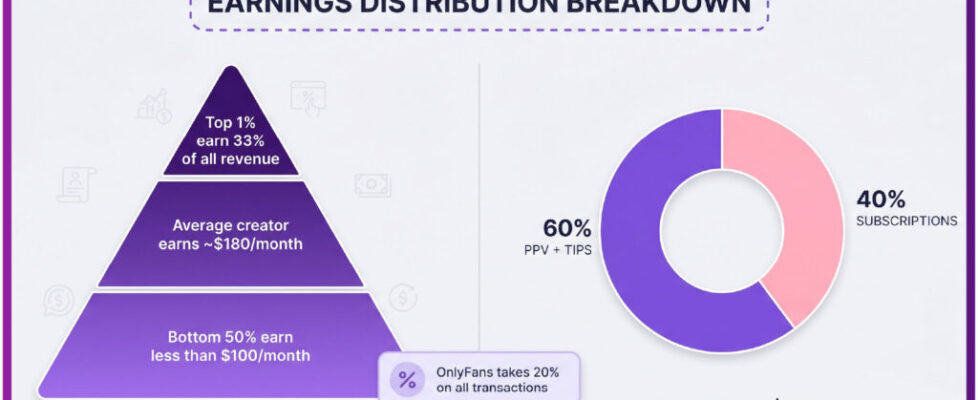
If a link asks for credentials, close it. Payment should only happen through the platform’s own checkout, where the fee structure is transparent: the platform takes 20% on subscriptions, tips, and pay-per-view, and the creator keeps 80%.

Inactive versus newly started
A quiet page is not always abandoned. Some accounts launch recently and simply have little history yet. The difference matters because a new page can still be genuine, while a dormant one usually is not worth a subscription.
New pages tend to show a short but steady timeline, consistent identity details, and recent creation dates. Inactive pages show the opposite: an older profile with activity that stopped months ago.
- Newly started: recent creation date, few posts, steady recent activity
- Newly started: identity details that match across platforms from day one
- Inactive: older profile with a long gap since the last post
- Inactive: no updates to bio, links, or pinned content in months
- Unclear: fresh post after a long silence with no follow-up
When a page sits in the unclear category, treat it as inactive for payment purposes. Following costs nothing, but subscribing does.
What to do when a page fails checks
Failing a check does not require drama. The practical response is a short sequence of actions that protects your account and your money. Order matters, because payment decisions should come last.
Start by not paying. Free pages cost nothing to follow, since a free page is simply a subscription price of $0 with earnings from pay-per-view messages and tips. If you already subscribed to a paid page, remember the fee structure before deciding: paid subscriptions typically run $4.99 to $15, with averages around $5 to $10, and the maximum is $49.99. There is no base price below $4.99; only promotional first months may dip lower.
- Do not send payment or leave a tip
- Unfollow or unfriend the account
- Report the profile if it copies another page
- Remove any saved links pointing to it
- Note the handle so you can recognize similar copies later
- Check whether your subscription auto-renew is still active
If a creator raises the subscription price, auto-renew stops automatically. Existing access lasts until the current paid period ends, so there is no need to cancel in a hurry after a price change.
Turning on two-step authentication in account settings adds a layer of protection while you sort out a suspicious page. It takes a minute and prevents most unauthorized logins.
Ranking sites exist precisely because the platform has no discovery feed. BestOnlyFans and similar directories help readers find pages, but they cannot guarantee that every listing stays current. Verification is still the reader’s job. BestOnlyFans lists pages by observable signals, not by volume.
A short routine covers most cases: check the posting gap, compare identity details across platforms, inspect links before clicking, and avoid payment until the page proves active. That is enough to filter out most fakes and dormant accounts. BestOnlyFans refreshes its rankings every month.
FAQ
How can I tell if an OnlyFans page is fake?
Check for a generic bio, borrowed images, mismatched links, and a recent creation date. Several red flags together usually mean the page is a copy.
What gap between posts means a page is inactive?
A silence of three months or more usually indicates a dormant page. Gaps of one to three months are a warning sign that deserves verification before payment.
Is it safe to follow a page I have not verified?
Following a free page carries little risk, but avoid payment until the posting history and identity details check out across platforms.
What should I do after subscribing to a page that turns out inactive?
Stop any further payment, unfollow the account, and check that auto-renew is off. Existing access lasts until the current paid period ends.